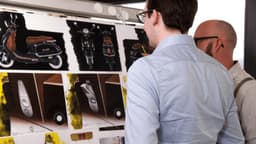
Product Design
Design physical or digital products for clients.
About Product Design
Every product you use—from apps on your phone to furniture in your home—was designed by someone who figured out how to make it functional, beautiful, and manufacturable. Product designers bridge the gap between ideas and reality, shaping how things look, feel, and work. In the digital world, this often means designing user interfaces, apps, and software experiences.
For digital nomads, digital product design is especially accessible. UX/UI designers work entirely on computers, collaborating remotely with developers and stakeholders. Your laptop becomes your design studio, whether you're wireframing in Berlin or prototyping in Buenos Aires. Physical product designers face more constraints but can still handle concept development and CAD work remotely.
Digital Product Design vs. Physical Product Design
For remote work and digital nomad life, these are very different paths:
| Aspect | Digital Product Design | Physical Product Design |
|---|---|---|
| Tools | Figma, Sketch, Adobe XD | CAD software, 3D modeling |
| Remote viability | Excellent | Moderate (prototyping harder) |
| Client types | Tech companies, startups, agencies | Manufacturing, consumer goods |
| Typical rates | $60-200/hour | $50-150/hour |
| Portfolio building | Easier (spec work, redesigns) | Harder (need real projects) |
This guide focuses primarily on digital product design (UX/UI), which is far more accessible for remote work.
What Product Designers Actually Do
Digital product design involves:
Research & Discovery
- User interviews and testing
- Competitive analysis
- Understanding business requirements
- Identifying problems to solve
Design & Ideation
- Wireframes and low-fidelity mockups
- User flows and information architecture
- High-fidelity visual designs
- Interactive prototypes
Collaboration & Implementation
- Working with developers on implementation
- Design system documentation
- Iteration based on feedback
- Measuring design impact
Junior designers focus more on execution (creating screens). Senior designers spend more time on strategy, research, and mentoring.
Getting Started as a Product Designer
Phase 1: Learn Fundamentals (Months 1-3)
- Master Figma (the industry standard, free for personal use)
- Study design principles: typography, color theory, layout, hierarchy
- Learn UX basics: user flows, wireframing, usability principles
- Consume design content: Refactoring UI, Design+Code, YouTube tutorials
Phase 2: Build Portfolio (Months 3-6)
- Create 3-5 case study projects showing your full process
- Redesign existing apps/websites (speculative work)
- Participate in design challenges (Daily UI, etc.)
- Document your thinking, not just final screens
Phase 3: Get Experience (Months 6-12)
- Take small freelance projects on Upwork
- Offer discounted work for startups or nonprofits
- Apply for junior roles or internships
- Build relationships in design communities
Phase 4: Advance (Year 2+)
- Specialize in an industry or product type
- Raise rates as portfolio grows
- Apply to Toptal or similar premium platforms
- Consider contract roles with startups for better rates
The Tools You'll Use
Essential:
- Figma - Industry standard for UI design, prototyping, collaboration
- Figjam/Miro - Whiteboarding and ideation
- Notion - Project documentation, client management
- Google Drive - File organization and sharing
Also Useful:
- Maze/UserTesting - User research and testing
- Loom - Recording design walkthroughs for clients
- Linear/Jira - Working with development teams
- Principle/After Effects - Motion design and microinteractions
Realistic Income Progression
| Stage | Typical Rate | Monthly Income (Full-time) |
|---|---|---|
| Learning (0-6 months) | $0 (building portfolio) | $0 |
| Entry-level (6-12 months) | $30-50/hour | $1,500-3,000 |
| Junior (1-2 years) | $50-75/hour | $3,000-5,000 |
| Mid-level (2-4 years) | $75-125/hour | $5,000-10,000 |
| Senior (4+ years) | $125-200+/hour | $10,000-20,000+ |
Contract roles at startups often pay $80-150/hour for experienced designers, with 20-40 hour/week commitments.
Finding Product Design Work
Freelance Platforms:
- Upwork - Wide range of projects, good for building portfolio
- Toptal - Premium rates but competitive application process
- Dribbble/Behance job boards - Design-specific opportunities
Direct Client Acquisition:
- Cold outreach to startups (look for companies with clunky products)
- Network in design communities (Twitter/X, Slack groups, Discord)
- Content creation demonstrating expertise
Contract/Employment:
- AngelList/Wellfound for startup roles
- LinkedIn for remote product design positions
- Design-specific job boards (Designer News, etc.)
The Portfolio Is Everything
In product design, your portfolio matters more than credentials, years of experience, or where you've worked. A strong portfolio shows:
- Process, not just pixels - How you think through problems
- Business impact - How design decisions affect metrics
- Constraints navigation - Working within real limitations
- Iteration - How you respond to feedback
Even without professional experience, you can build compelling portfolio pieces through:
- Redesigning existing products with clear rationale
- Creating concept designs for problems you've identified
- Documenting personal projects thoroughly
- Volunteer work for nonprofits or early-stage startups
The Nomad Reality
Digital product design is excellent for nomad life because:
- Work is entirely laptop-based
- Collaboration happens through Figma and async tools
- Many companies are already remote-first
- Time zone flexibility is common
Challenges:
- User research interviews may require schedule coordination
- Some clients expect real-time availability during business hours
- Video calls with clients/teams work better with stable internet
What This Pairs Well With
Product design skills overlap significantly with web design and graphic design. Understanding software development makes you more effective at working with engineers and can open full-stack design opportunities.
Many product designers eventually move into design leadership, start their own agencies, or create design-focused products (templates, courses, tools).
Getting started: Learn design fundamentals and tools like Figma, Sketch, or Adobe XD for digital products. Build a portfolio showcasing your design process—not just final products, but how you think through problems. Take on small freelance projects to gain experience and testimonials. Consider specializing in an industry (fintech, health, e-commerce) or product type (mobile apps, SaaS platforms) to differentiate yourself.
Business Models
Frequently Asked Questions
What's the difference between UX design and UI design?
UX (user experience) design focuses on how a product works—user flows, information architecture, usability. UI (user interface) design focuses on how it looks—visual design, typography, colors, components. Many roles combine both as 'product design,' but larger companies separate them. UX typically requires more research skills; UI requires stronger visual design skills.
Can I become a product designer without a degree?
Yes. Most companies care about your portfolio and skills, not credentials. Self-taught designers regularly land good roles. The challenge is building a strong portfolio without professional experience—you'll need to create spec projects, volunteer work, or personal projects that demonstrate your problem-solving process.
How long does it take to become job-ready as a product designer?
Realistically, 6-12 months of focused learning and portfolio building for entry-level opportunities. This assumes consistent effort learning design principles, tools (Figma primarily), and building 3-5 portfolio projects that showcase your process. Some bootcamps compress this into 3-6 months but are expensive ($10-15K).
What do freelance product designers charge?
Junior freelancers: $40-75/hour. Mid-level: $75-125/hour. Senior/specialized: $125-200+/hour. Project rates vary widely—a simple website redesign might be $2,000-5,000 while a full app design could be $10,000-50,000+. Contract roles at startups often pay $80-150/hour for experienced designers.
Difficulty Level
Somewhat Difficult 😕
Level of Passivity
Active With Passive Options
How to Monetize
- Paid Per Hour
- Paid Per Project
- Per Sale