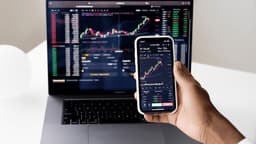
Day Trading
Trade financial assets throughout the day to profit from price changes.
About Day Trading
What is Day Trading?
Day trading means buying and selling financial assets (stocks, crypto, forex) within the same day to profit from short-term price movements. Unlike investing, you're not holding for years—you're trying to capture small price swings.
It appeals to nomads because you need only a laptop and internet. But here's the uncomfortable truth: most people who try day trading lose money. This page will be honest about both the appeal and the risks.
The Appeal for Nomads
Location Independence
- Trade from anywhere with internet
- No clients to manage
- No products to ship
- Markets don't care where you are
Theoretically Unlimited
- Your income isn't capped by hours
- Profits compound if you're successful
- Nobody controls your schedule
Complete Autonomy
- No boss, no deadlines
- Success or failure is entirely yours
- Make your own decisions
The Harsh Reality
Most Traders Lose
Let's be clear:
| Statistic | Source |
|---|---|
| 70-90% of day traders lose money | Multiple academic studies |
| Average day trader underperforms buy-and-hold | Research across markets |
| Majority quit within 2 years | Broker data |
This isn't about discouraging you—it's about making sure you understand what you're considering.
Why People Lose
- Overconfidence in early wins
- No edge over professionals
- Poor risk management
- Emotional decision-making
- Insufficient capital
- Trading too frequently
The Psychological Toll
Day trading is:
- Intensely stressful
- Emotionally exhausting
- Potentially addictive
- Isolating
Watching money appear and disappear constantly takes a toll that's hard to appreciate until you experience it.
What Successful Traders Have
Capital
You need enough that:
- Losses don't ruin you financially
- You can survive months without profit
- You're not trading scared
A Tested Edge
Profitable traders have strategies that:
- Work over hundreds of trades
- Are back-tested on historical data
- Have clear entry and exit rules
- Manage risk systematically
Emotional Discipline
They can:
- Follow rules without exception
- Take losses without revenge trading
- Stay calm during volatility
- Walk away when needed
Time
Most successful traders:
- Spent 1-3+ years learning
- Lost money during that period
- Treated it like full-time education
- Had other income sources meanwhile
If You Still Want to Try
Paper Trade First
Practice with fake money for at least 6 months:
- Use a simulator
- Keep detailed records
- Test different strategies
- Don't use real money until consistently profitable
Start Extremely Small
When you go live:
- Use money you can 100% lose
- Keep position sizes tiny
- Focus on learning, not earning
- Scale up very slowly
Have Rules and Follow Them
Decide before trading:
- Maximum loss per trade
- Maximum daily loss
- Entry and exit criteria
- When you'll stop for the day
Keep Your Day Job
Until you have:
- 6+ months of profitable trading
- Enough savings to survive a year
- A proven, repeatable strategy
- Emotional control
Do not quit your income source.
Markets to Consider
| Market | Minimum Capital | Hours (US) | Notes |
|---|---|---|---|
| US Stocks | $25,000 (PDT rule) | 9:30am-4pm ET | Most accessible |
| Crypto | Low ($100+) | 24/7 | More volatile, less regulated |
| Forex | Low ($500+) | 24/5 | Leverage is dangerous |
| Futures | Medium ($5,000+) | Varies | Complex, high leverage |
What You'll Need
Equipment
- Reliable computer
- Stable, fast internet
- Backup internet option
- Quiet workspace
- Multiple monitors (helpful, not required)
Tools
- Brokerage account
- Charting software
- Notion or journal for records
- News sources
Education (Be Skeptical)
- Books on trading psychology
- Technical analysis basics
- Risk management
- Backtesting methods
Warning: Most trading courses are sold by people who make money from courses, not trading. Free resources exist.
Alternatives to Consider
If the appeal is location-independent income without clients:
| Alternative | Risk Level | Income Stability |
|---|---|---|
| Website investing | Medium | More stable |
| Digital products | Low | Builds over time |
| Dividend investing | Low-Medium | Passive, slower |
| Index fund investing | Low | Long-term growth |
Who Should Consider This?
Maybe consider it if you:
- Have significant capital you can lose
- Have other stable income
- Can handle extreme stress
- Are willing to study for 1-2+ years
- Understand the odds are against you
- Have genuine interest in markets
Do not pursue this if you:
- Need reliable income
- Would be devastated by losses
- Are looking for quick money
- Have an addictive personality
- Can't afford to lose your capital
- Expect to succeed quickly
The Bottom Line
Day trading offers ultimate location freedom and no income ceiling—in theory. In practice, most people lose money, often substantial amounts. The winners are highly disciplined, well-capitalized traders who spent years developing their skills.
If you're attracted to markets, consider long-term investing instead. It has better odds, requires less time, and won't consume your mental energy.
If you still want to try trading, do it with money you can afford to lose, treat it as expensive education, and don't quit your income source until you have years of proven results.
Be honest with yourself about why this appeals to you. If it's about easy money or escape, it won't work. If it's about genuine interest in markets and you accept the risks, proceed with extreme caution.
Most traders lose. Know that going in.
Business Models
Frequently Asked Questions
Do most day traders make money?
No. Studies consistently show 70-90% of day traders lose money. The small percentage who profit are typically extremely disciplined, well-capitalized, and have spent years learning. It's not a get-rich-quick path—it's more like trying to become a professional athlete.
How much money do I need to start?
For US stock day trading, the Pattern Day Trader rule requires $25,000 in your account. Crypto and forex have lower minimums. Realistically, you need enough capital that losses won't devastate you while you're learning, plus living expenses since you won't have reliable income.
Can I learn from YouTube videos and courses?
You can learn basics, but be extremely skeptical. Many 'gurus' make money selling courses, not trading. If someone had a reliable trading strategy, they'd use it themselves rather than sell it. Learn fundamentals, then practice with paper trading (fake money) extensively.
Is day trading gambling?
It can be. Without a tested strategy, risk management, and emotional discipline, it's essentially gambling with worse odds than a casino. Successful traders treat it like a business with strict rules—not like placing bets.
Difficulty Level
Somewhat Difficult 😕
Level of Passivity
Fully Active
How to Monetize
- Capital Gains